In a complete hydraulic system, hydraulic flanges serve as core pressure-bearing and sealing accessories for high-pressure pipelines, pump and valve ports, and cylinder interfaces. Reasonable type selection and working condition matching directly determine the operational stability, sealing reliability and overall service life of hydraulic equipment. Most common hydraulic faults in industrial sites, such as pipeline oil leakage, seal failure, high-pressure pipe burst, loose joint leakage, and equipment pressure relief and vibration, are mainly caused by incorrect flange model selection, mismatched parameters and inappropriate working condition adaptation.
At present, four mainstream types of hydraulic flanges are widely used in industrial hydraulic systems: SAE flanges, hydraulic square flanges, flared flanges and port flanges. These four types of hydraulic flanges have significant differences in appearance and structure, sealing principle, pressure bearing grade, installation method and applicable working conditions, and are also the most confusing and frequently mismatched accessories for hydraulic engineers, equipment purchasers and maintenance personnel. This article comprehensively analyzes the structural characteristics, sealing advantages, applicable scenarios and forbidden working conditions of the four types of hydraulic flanges, and is equipped with a professional selection comparison table, providing authoritative and practical selection references for the design, pipeline reconstruction, daily maintenance and parts procurement of industrial hydraulic equipment.
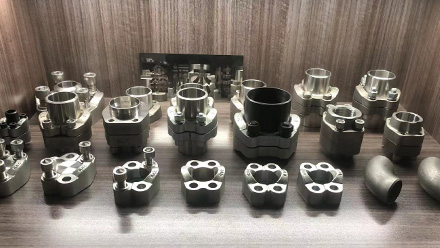
1. SAE Flange: Preferred Anti-vibration Sealing Solution for General High-pressure Pipelines
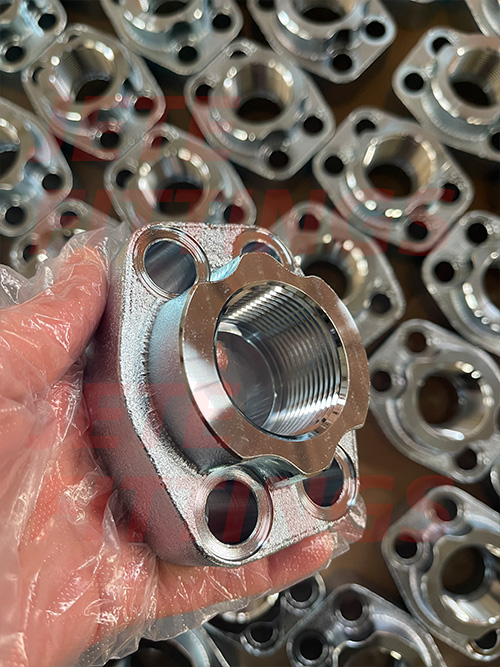
SAE flange is a high-pressure hydraulic connecting flange manufactured in strict accordance with the SAE J518 international industry standard, and it is the hydraulic industry accessory with the highest standardization, universality and interchangeability. The mainstream market is divided into two specifications: Code 61 (light type, rated 3000PSI) and Code 62 (heavy type, rated 6000PSI), which are suitable for medium-high pressure and ultra-high pressure pipeline working conditions respectively. It is widely used for pipeline connection of various heavy-duty hydraulic equipment.
Structure and Sealing Principle
It adopts a four-bolt split flange structure with O-ring axial compression sealing. The leakage-free sealing is realized by pressing the O-ring tightly through the flange end face. Different from traditional thread sealing, it completely avoids oil leakage problems caused by thread loosening and slipping. It features high overall structural strength, uniform bolt arrangement and balanced pressure bearing.
Core Advantages
It adopts national standard universal design with strong interchangeability and convenient procurement; it has high structural strength, excellent anti-vibration and anti-impact capabilities, and can adapt to harsh working conditions such as frequent equipment start-stop, outdoor bumping and continuous heavy load; it features stable and reliable high-pressure sealing performance, suitable for ultra-high pressure pipelines up to 42MPa; it supports repeated disassembly and assembly for maintenance with small sealing attenuation and long service life, which greatly reduces equipment failure rate and maintenance cost.
Applicable Scenarios
It is mainly used for butt connection of various large-scale high-pressure hydraulic pipelines, widely applicable to heavy-load, high-vibration and high-pressure working conditions of construction machinery, mining machinery, tunnel boring machines, large injection molding machines, wind power hydraulic systems, marine hydraulic equipment, metallurgical hydraulic units and other equipment, serving as the preferred standard flange for industrial high-pressure hydraulic pipeline connection.
Notes
It is necessary to strictly distinguish between SAE Code 61 light type and Code 62 heavy type during selection. The misuse of heavy-duty SAE flanges in low-pressure ordinary working conditions will cause unnecessary accessory cost waste; the misuse of light-duty specifications in high-pressure and heavy-load working conditions will easily lead to insufficient pressure bearing and seal failure, and even cause safety hazards such as pipeline burst and oil leakage pressure relief in severe cases.
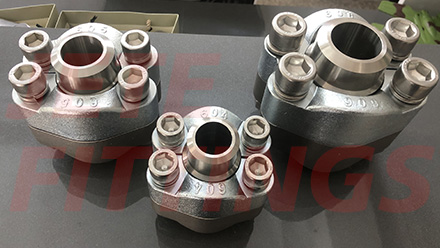
2. Hydraulic Square Flange: Special Square Flange for Valve Block Equipment Adaptation
Hydraulic square flange, also known as square hydraulic flange or valve block special flange, is a special adaptive flange customized for hydraulic valve groups and hydraulic station integrated systems. Its most prominent feature is the square appearance structure, different from conventional circular SAE flanges. It is mainly designed for equipment fixed installation, flat surface bonding sealing and dense integrated installation scenarios, and is a core supporting accessory for hydraulic complete equipment assembly.
Structure and Sealing Principle
It adopts an integral square structure with diagonally distributed bolts. The installation contact surface is flat and closely fitted with flat surface sealing or embedded O-ring sealing structure. It can be perfectly attached to the plane of valve blocks and equipment boxes during installation with uniform stress and no offset, achieving a higher sealing surface fitting degree than ordinary circular flanges.
Core Advantages
The integral square structure features high fitting accuracy, stable installation without offset, which can effectively avoid flange dislocation, loose sealing and oil leakage caused by long-term equipment operation; it has a compact and small size, adapting to the dense integrated layout of multi-way valves in hydraulic stations and saving installation space; it bears uniform pressure with excellent static sealing performance, ensuring no leakage or loosening during long-term operation.
Applicable Scenarios
It is mostly used for static fixed sealing working conditions, including hydraulic valve block installation, hydraulic station overall integration, fixed equipment port plugging, box sealing, multi-way valve interface sealing and other scenarios. It is suitable for the integrated assembly of various hydraulic complete equipment, but not applicable to moving and high-frequency vibration hydraulic pipeline connections.
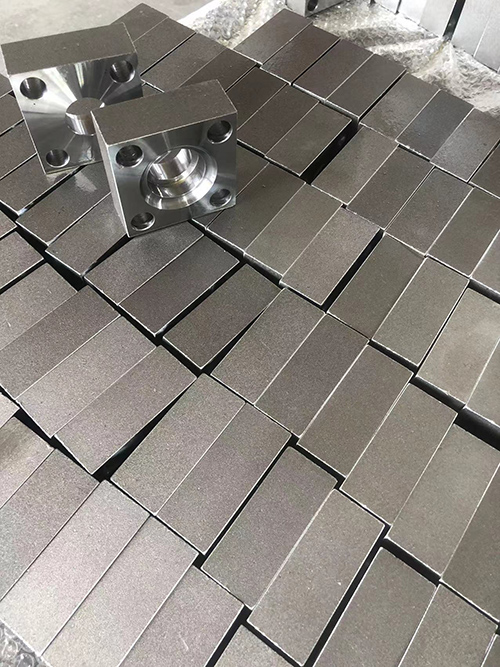
3. Flared Flange: Gasket-free Quick-install Flange for Medium-high Pressure Precision Pipelines
The flared flange is a lightweight gasket-free hydraulic flange. It abandons the structural design of traditional flanges relying on gaskets and O-rings for auxiliary sealing, and adopts the metal pipeline flared self-sealing principle, featuring simple disassembly and assembly and convenient maintenance. It is the preferred accessory for precision hydraulic pipelines and working conditions requiring frequent maintenance and inspection.
Structure and Sealing Principle
The seal is formed by pressing the flared metal surface of the pipeline port through the flange to realize metal hard sealing, relying on the precise fitting of metal surfaces for sealing without additional sealing gaskets or rubber rings, with an extremely simple structure and few sealing links.
Core Advantages
No vulnerable accessories such as gaskets and sealing rings are required, fundamentally eliminating oil leakage caused by gasket aging and rubber ring failure; it features high-precision metal hard sealing and stable sealing performance, meeting the needs of precision hydraulic control; the disassembly and assembly process is simple, greatly reducing equipment maintenance man-hours; it has a small size, adapting to narrow and compact equipment installation spaces.
Applicable Scenarios
It is dedicated to medium and medium-high pressure precision hydraulic pipelines, widely used in precision machine tool hydraulic systems, automatic production line hydraulic pipelines, medium and small precision hydraulic equipment oil circuits, and hydraulic interfaces requiring frequent disassembly, assembly and maintenance. It is not applicable to ultra-high pressure working conditions, heavy-duty equipment and strong vibration pipeline scenarios.
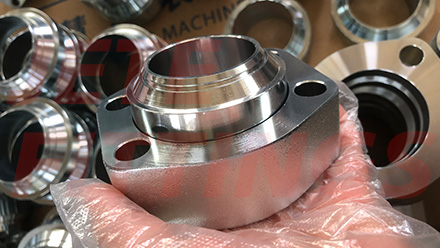
4. Port Flange: Special Adaptive Flange for Original Equipment Port Maintenance and Replacement
The port flange is a special adaptive flange customized for the original oil ports of hydraulic main equipment, belonging to factory-matched non-standard flange products. Its core advantages are accurate factory adaptation and modification-free replacement. It is mainly used to solve oil port leakage, seal aging, interface damage and old reconstruction problems of hydraulic pumps, hydraulic valves, hydraulic motors, hydraulic cylinders and other main equipment.
Structure and Sealing Principle
It is customized in strict accordance with the original oil port size, aperture and bolt spacing of pumps, valves, motors and cylinders, matching the original equipment interface structure with a dedicated sealing structure. It can perfectly fit the original installation position of equipment without hole drilling or pipeline modification.
Core Advantages
It strictly matches the original oil port aperture, bolt hole spacing and installation size of equipment with high adaptation and zero installation error; it is plug-and-play without hole drilling or pipeline transformation, greatly reducing the difficulty of equipment maintenance and reconstruction; it can quickly repair oil port wear, pressure relief and oil leakage faults of old equipment with high maintenance cost performance.
Applicable Scenarios
It is specially adapted to the original oil ports of hydraulic main equipment such as hydraulic pumps, hydraulic valves, hydraulic motors and hydraulic cylinders, used for oil port seal replacement, aging accessory replacement, fault maintenance and upgrading reconstruction of old equipment, serving as a core special accessory for daily hydraulic equipment maintenance scenarios.
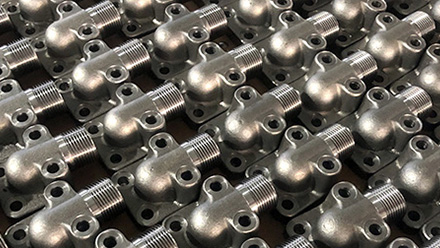
5. Working Condition Selection Comparison Table for Four Types of Hydraulic Flanges (Quick Reference for Engineers & Purchasers)
Flange Type | Core Structure | Sealing Method | Adaptable Pressure | Core Advantages | Best Applicable Working Conditions | Forbidden Scenarios |
|---|
SAE Flange | Circular four-bolt split type | O-ring axial compression sealing | Medium-high / Ultra-high pressure (≤42MPa) | Strong universality, excellent vibration and impact resistance, stable high-pressure sealing, reusable after disassembly | High-pressure vibration pipelines of construction machinery, mining, marine and large-scale equipment | Narrow fixed plugging, low-pressure precision pipelines |
Hydraulic Square Flange | Integral square structure | Flat sealing / O-ring sealing | Medium-high pressure (≤31.5MPa) | High fitting accuracy, uniform stress, stable installation, strong integration performance | Hydraulic valve block, hydraulic station, fixed equipment oil port, static plugging | Moving vibration pipelines, frequently disassembled interfaces |
Flared Flange | Simplified integral structure | Metal flared hard sealing (gasket-free) | Medium pressure (≤25MPa) | Convenient disassembly and assembly, no vulnerable parts, clean sealing, suitable for narrow spaces | Precision pipelines of machine tools & automation equipment, interfaces requiring frequent maintenance | Ultra-high pressure, heavy-load and strong vibration working conditions |
Port Flange | Customized adaptive structure | Original equipment adaptive dedicated sealing | Matches original equipment pressure | Precise adaptation, no modification required, simple replacement, low maintenance cost | Maintenance & replacement of pump/valve/motor/cylinder ports, old equipment reconstruction | Standard pipeline general connection, non-standard expansion and reconstruction |
6. Core Hydraulic Flange Selection Principles (Fault Avoidance Guide)
6.1 Selection by Pressure Grade
SAE Code 62 heavy-duty flanges are preferred for ultra-high pressure working conditions (>35MPa) and heavy-load vibration pipelines; hydraulic square flanges are selected for medium-high pressure working conditions (25-35MPa) with equipment integration and static fixation scenarios; flared flanges are suitable for medium pressure working conditions (≤25MPa) and precision hydraulic pipelines; customized port flanges are adopted for maintenance and replacement of original ports of all hydraulic main equipment.
6.2 Selection by Working Condition
SAE standard flanges are mandatory for outdoor heavy-load, mobile equipment and high-frequency vibration hydraulic pipelines; hydraulic square flanges are preferred for hydraulic valve block integration, hydraulic station fixed sealing and equipment static plugging scenarios; flared flanges are suitable for precision automation equipment and hydraulic systems requiring frequent disassembly and maintenance; port flanges are used for daily equipment maintenance, aging port replacement and old equipment reconstruction.
6.3 Selection by Cost and Service Life
Standardized SAE flanges are preferred for long-term continuous operation high-pressure hydraulic equipment due to high stability, low failure rate and long service life; port flanges are optimal for short-term maintenance replacement and low-cost repair scenarios; maintenance-free flared flanges are prioritized for precision hydraulic equipment to reduce sealing failure frequency; hydraulic square flanges are adopted for hydraulic station complete set integration projects for regular layout and unified sealing performance.
Summary
There is no absolute superiority or inferiority among the four types of common hydraulic flanges, and the core lies in accurate working condition matching and parameter-adapted selection. SAE flanges focus on general high-pressure pipelines with vibration resistance and durability; hydraulic square flanges are dedicated to valve block integration and static fixed sealing; flared flanges are applied to precision pipelines with convenient disassembly and maintenance; port flanges are used for factory adaptation and equipment maintenance replacement. Accurate flange model selection can fundamentally solve common hydraulic system faults such as oil leakage, high-pressure pipe burst, seal failure and equipment pressure relief, effectively improve the operational stability of hydraulic equipment, and greatly reduce later operation and maintenance costs.
This article comprehensively sorts out the differences and selection skills of SAE flanges, hydraulic square flanges, flared flanges and port flanges, which is applicable to hydraulic equipment design, pipeline reconstruction, parts procurement and equipment maintenance, serving as a permanent selection reference manual for factory equipment managers, hydraulic engineers and purchasers.