SAE flanges are critical sealing connectors for construction machinery, hydraulic power units and industrial equipment in high-pressure hydraulic piping systems. Many procurement staff and equipment engineers struggle to distinguish between SAE J518 and ISO 6162 hydraulic flanges. The two look almost identical, leading to frequent mix-ups during purchasing and installation.
Despite their similar appearance, they have definitive differences in seal groove dimensions, O-ring specifications, bolt hole spacing and compression parameters. Improper assembly will cause insufficient O-ring compression, poor sealing, high-pressure oil leakage and pipeline pressure loss. In severe cases, it results in equipment shutdown, mass rework and product returns. Based on practical industrial experience, this article details the core differences between the two standards and provides professional selection guidelines to eliminate misuse risks.
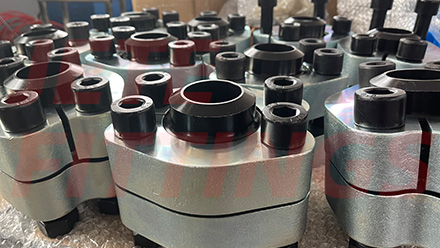
1. Standard Background & Applicable Equipment
Both SAE J518 and ISO 6162 are universal standards for high-pressure hydraulic flange connections, yet they serve distinct equipment systems and application scenarios.
SAE J518Formulated by SAE International, it is a
American-standard hydraulic flange specification. It is the dominant standard for North American construction machinery, American hydraulic components, imported excavators, tunnel boring machines and American-style hydraulic power units, and is also the most widely adopted production standard for high-pressure SAE flanges in China.
ISO 6162Issued by the International Organization for Standardization (ISO), it belongs to the
European-standard system. It is extensively applied to German and European industrial hydraulic equipment, injection molding machines, European imported hydraulic valve manifolds and automated hydraulic systems, and is a mainstream choice for supporting components of exported European equipment.
In short: Use SAE J518 for American-style equipment, and ISO 6162 for European-style equipment. The equipment origin is the primary reference for preliminary judgment.
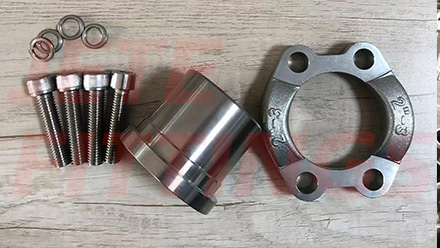
2. Core Distinction: Non-interchangeable Seal Grooves & O-Rings
Over 90% of oil leakage failures are caused by mismatched seal grooves, which is the key technical difference between the two standards and must never be overlooked.
SAE J518 flanges adopt dedicated American-standard grooves with fixed width, depth and fillet radii, and only match American-standard O-rings. Designed for working pressures of 3000 PSI to 6000 PSI, it delivers excellent resistance to pressure pulsation and vibration.
ISO 6162 flanges feature European-standard grooves that are slightly wider and different in depth, paired with exclusive European-style sealing rings.
Installing an SAE J518 O-ring on an ISO 6162 flange leads to inadequate compression and excessive assembly gaps. Conversely, fitting a European O-ring onto an SAE J518 flange causes over-compression, deformation and cracking of the seal. Either wrong assembly will definitely trigger oil leakage and pressure drop under high pressure — the two sets of parts are completely non-interchangeable.
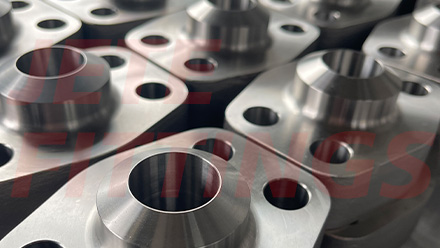
3. Differences in Structure and Bolt Hole Layout (Forbid Forced Assembly)
Though indistinguishable to the naked eye, flanges of the same nominal size under the two standards have noticeable deviations in outer diameter, thickness, bolt center distance and mounting hole size. These tiny dimensional errors will cause bolt misalignment and uneven fastening stress during installation.
On job sites, workers sometimes ream or drill holes forcibly for assembly. While the flanges seem to be installed properly, the sealing surface bears uneven load. Loosening and leakage will occur quickly under operational vibration, shortening the service life of hydraulic pipelines and posing serious safety hazards.
4. Pressure Rating and Application Scenarios
Both flanges are designed for high-pressure hydraulic systems, but they are engineered for different working conditions.
SAE J518 flanges feature high structural strength and strong sealing tolerance, ideal for heavy-duty, high-vibration and pulsating high-pressure conditions such as construction machinery, mining equipment and offshore facilities.
ISO 6162 flanges boast high precision and stable sealing performance. They are suitable for stable operating environments with low vibration, including automated equipment, precision machine tools and standard industrial hydraulic stations.
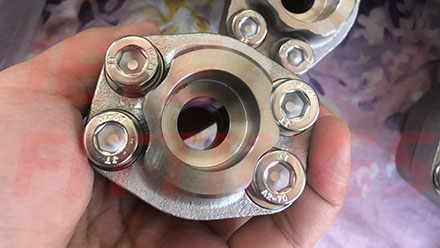
5. Practical Selection Guidelines
Here are practical rules to help technicians and purchasers select the right products and avoid mistakes:
Choose SAE J518 flanges for American-style equipment, imported excavators, tunnel boring machines, American hydraulic pumps & valves, and heavy mining machinery.
Prioritize ISO 6162 flanges for European/German hydraulic units, precision injection molding machines and automated hydraulic equipment.
For pipeline renovation and equipment maintenance, always check the original groove dimensions and bolt hole spacing. Never replace parts based on experience.
Confirm the equipment standard before bulk procurement to prevent wrong orders, on-site rework and project delays.
Conclusion
SAE J518 and ISO 6162 flanges cannot be used interchangeably. Similar in appearance, they differ fundamentally in sealing parameters, mounting dimensions and applicable working conditions. The basic selection principle is to strictly match flanges with the original equipment standard and avoid mixed use. This helps eliminate oil leakage, equipment failure and rework losses from the source, and ensures long-term reliable operation of hydraulic pipelines.
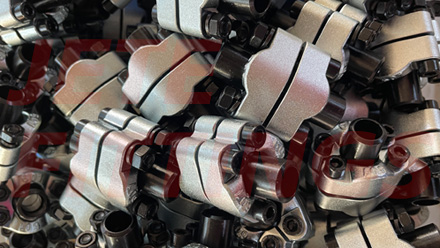
XF&JT offers mass production of SAE J518 and ISO 6162 hydraulic flanges. We supply products in carbon steel, 304 and 316 stainless steel. All items are manufactured in full compliance with international standards, featuring precise seal grooves, standard hole positions and reliable pressure resistance and sealing performance. We provide one-on-one product matching according to
Post time: Jun-15-2026